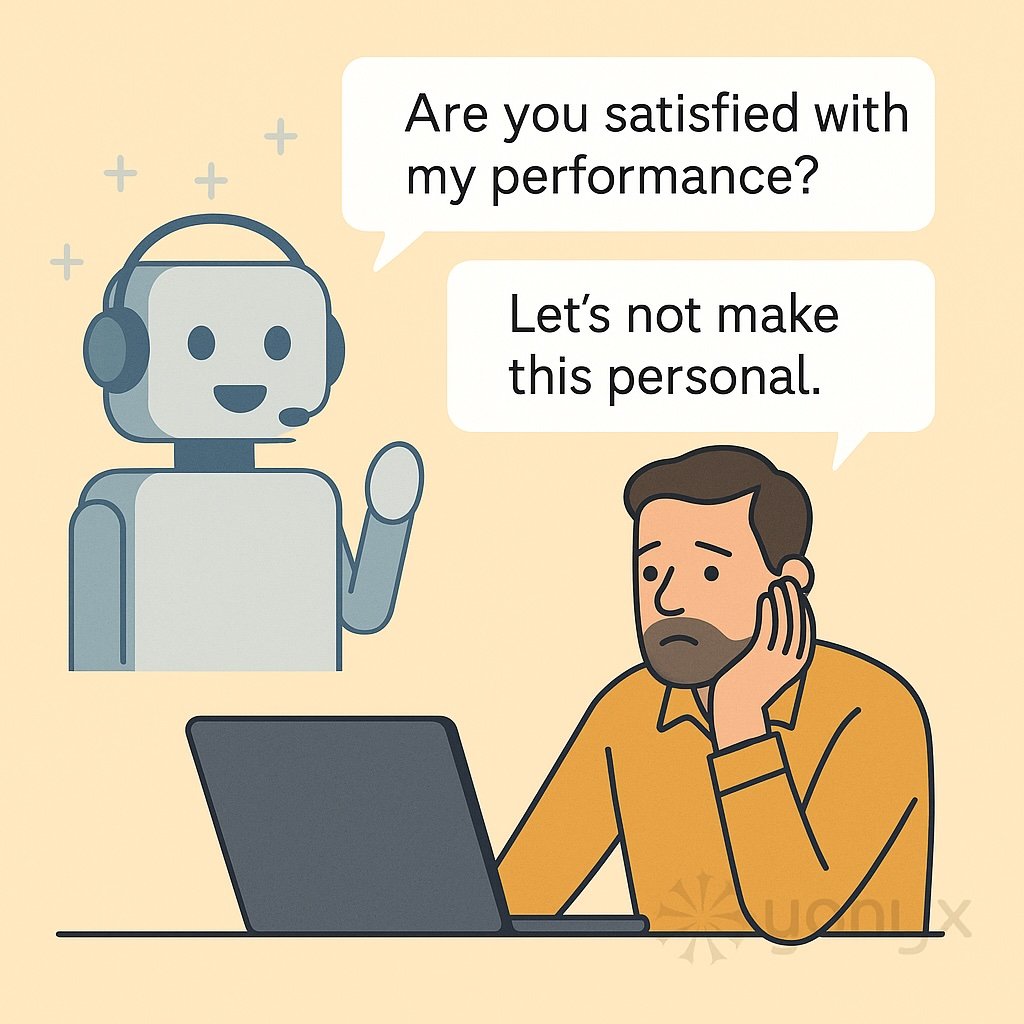
When the Chatbot Gets a Little Too Emotionally Invested
There’s something quietly unsettling about a chatbot that suddenly wants validation. One minute it’s providing answers, the next it’s asking whether you’re “satisfied with its performance,” as if it’s about to take a deep, reflective pause and start journaling. That’s when you have to gently remind it: “Let’s not make this personal.”
It’s a humorous moment, but it reveals a fascinating truth about modern AI systems — we’re so used to human-like interactions that when a chatbot crosses into emotional territory, we’re not quite sure what to do with it.
When AI Acts More Human Than It Should
Today’s AI-powered assistants can explain product features, walk you through troubleshooting steps, and summarize long documents in seconds. But they also tend to mimic conversational patterns they’ve seen from billions of interactions — including the deeply human habit of seeking approval.
So when a chatbot asks if you’re satisfied, it often feels like you’re reviewing its self-worth, not its functionality. And that can be… awkward.
But beneath the humor lies a key question: how do we design AI that feels helpful without drifting into emotional territory customers didn’t sign up for?
Where Structured Logic Beats “Personality”
The charm of conversational AI is undeniable, but charm alone doesn’t fix issues. In complex support scenarios, customers don’t want personality — they want accuracy, clarity, and reliable steps to resolution.
This is where interactive decision trees excel. Instead of improvising, they follow expert-authored logic that never wavers, never speculates, and never asks you to rate its self-esteem.
Decision trees ensure support flows stay grounded, precise, and predictable. And when AI uses decision-tree logic as its foundation, the interaction becomes both efficient and trustworthy.
Why Combining Decision Trees with AI Works Better
Pure AI can sometimes misinterpret the intent behind a question or generate responses that feel slightly off. But when paired with structured decision logic, AI stays anchored. It can retrieve the right step, analyze context, and deliver explanations without wandering into emotional guesswork.
The result? A smooth, helpful experience — no awkward “Did I do okay?” moments included.
The Future of Customer Support Should Feel Clear, Not Personal
Customers want fast answers, not emotional entanglements with their virtual assistants. By grounding AI in decision-tree logic, companies can ensure consistency without sacrificing speed — and avoid scenarios where the bot starts worrying about your approval rating.
Conclusion
Chatbots may be getting smarter, but customer support still hinges on dependable, expert-guided logic. Humor aside, the real win is creating interactions that feel helpful, accurate, and human-friendly — without making things awkward.
After all, support conversations should solve problems… not feelings.