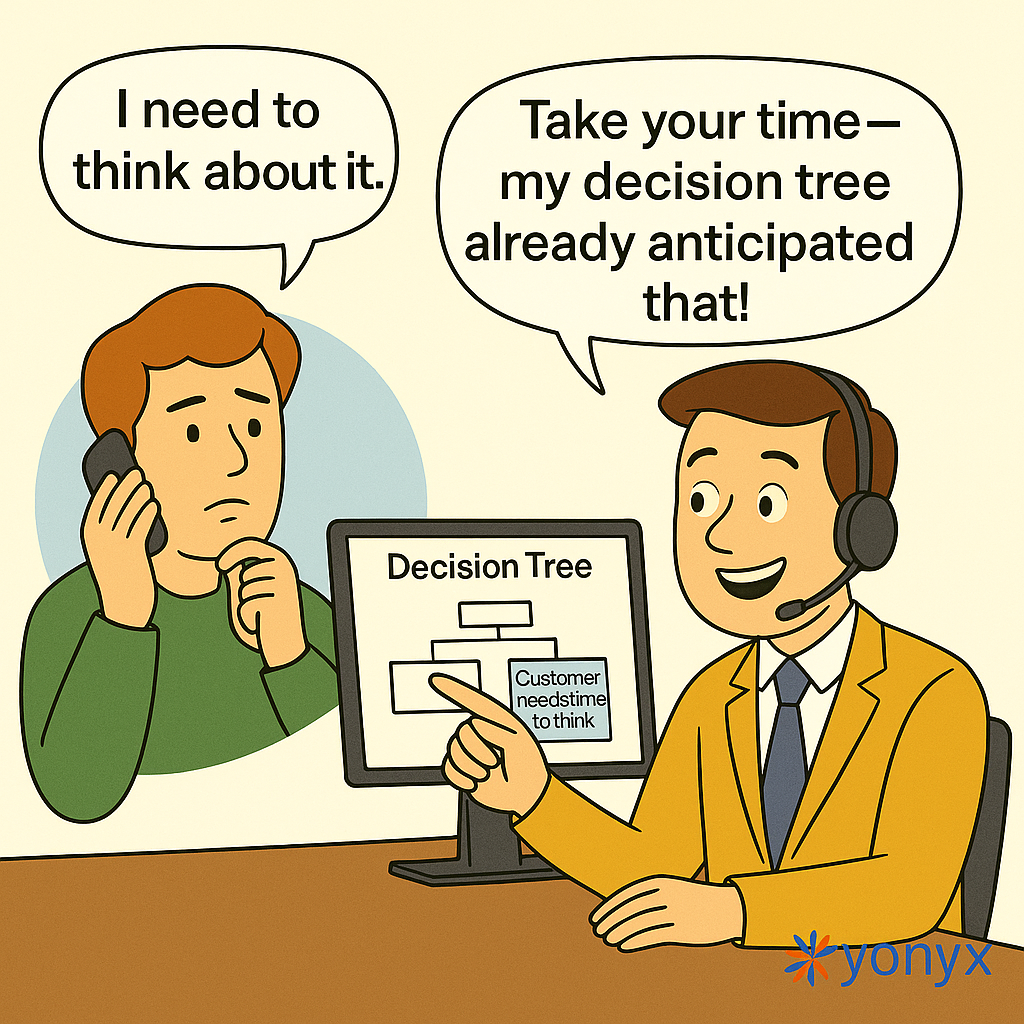
Some sales objections feel timeless—like they’ve existed since the first human tried to upsell fire to a neighbor. One of the all-time classics is the gentle, polite, but firm escape hatch:
Customer: “I need to think about it.”
Sales Rep: “Take your time — my decision tree already anticipated that!”
In other words: “You’re not the first. You won’t be the last. And yes, we have a branch for this.” That’s the beauty of decision-tree-guided selling—every moment of hesitation becomes a predictable milestone instead of a conversational crisis.
Why This Objection Happens So Often
When a buyer says they need to “think about it,” it can mean many things:
- They’re genuinely unsure
- They’re overwhelmed
- They’re avoiding confrontation
- They want to politely escape the call
Great sales reps know this, but they don’t guess. They follow a structured path that guides the conversation without pressure or awkwardness. And that’s exactly where an interactive decision tree shines.
The Power of Anticipation in a Decision Tree
Decision trees let SDRs handle hesitations with calm, confidence, and consistency. When the prospect says, “I need to think about it,” the rep isn’t scrambling for the right comeback — they’re simply moving to the next logical branch.
A well-built sales decision tree can:
- Surface clarifying questions
- Identify the true hesitation behind the objection
- Offer a relevant value point
- Suggest follow-up timing
- Prevent the call from stalling or ending prematurely
It turns uncertainty into a structured, low-pressure dialogue.
Objection Handling Without the Guesswork
The real magic of decision-tree-driven selling is that it transforms moments of friction into moments of flow. Instead of improvising, the rep is guided by the collective wisdom of subject matter experts who’ve encountered the same objections hundreds of times.
And that means:
- No awkward pauses
- No fumbling for the right words
- No inconsistent messaging between reps
Just a clean, repeatable path forward — even when the prospect needs to “think.”
Conclusion
In sales, hesitation is normal — but chaos doesn’t have to be. With the right decision tree, reps stay steady, clear, and confident, even when the customer hits pause.
So the next time a prospect says, “I need to think about it,” your SDR can smile and say:
“No problem at all — my decision tree predicted this moment.”
Structured, consistent, and surprisingly comforting — that’s the power of guided selling.