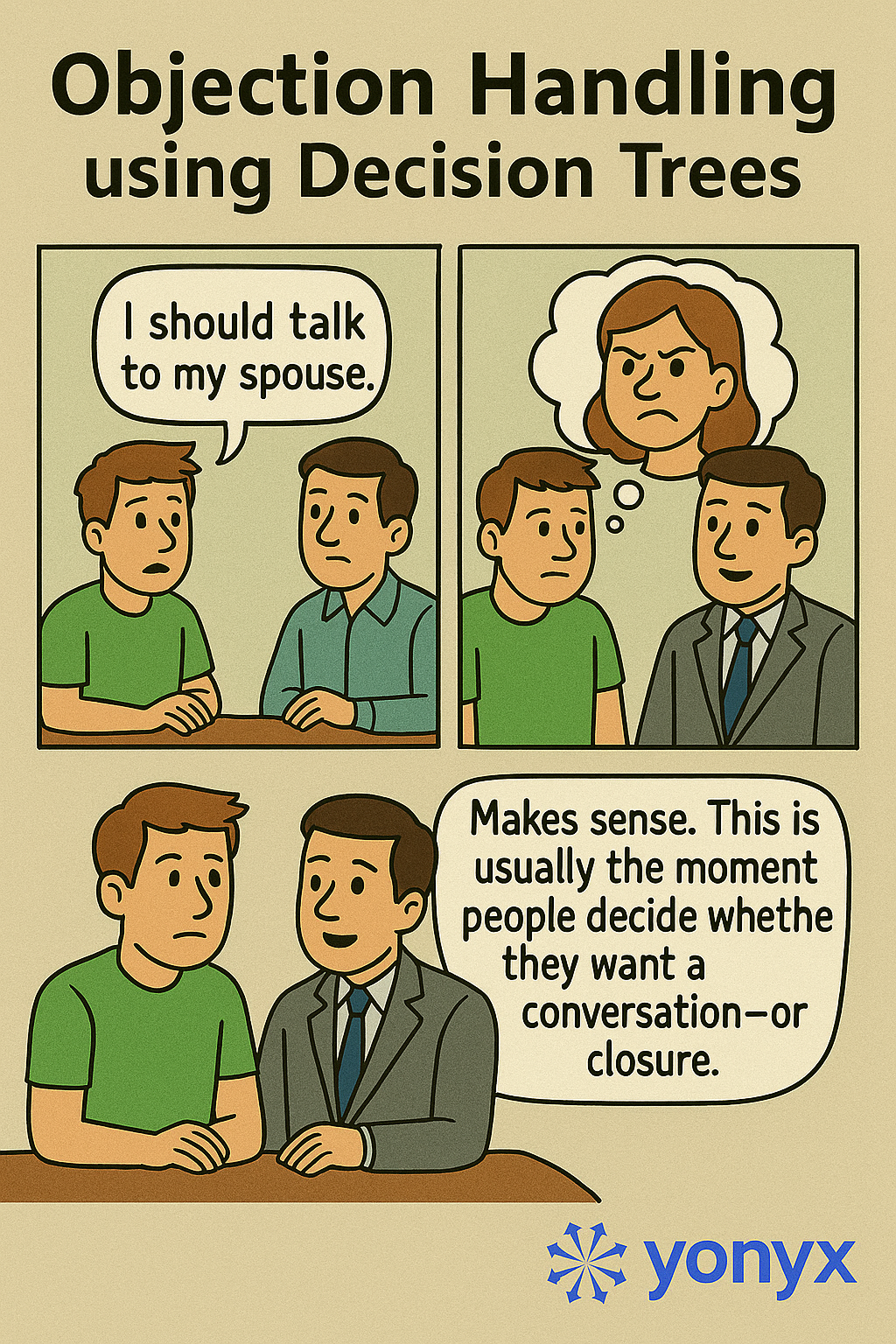
Objection handling using decision trees becomes especially clear the moment a customer says, “I should talk to my spouse,” and the entire sales conversation quietly reaches its most important fork.
In the image, the customer pauses, weighing the decision, while the BDR calmly responds with a line that every experienced salesperson recognizes: this is the moment where the path either leads to more discussion—or to closure.
This isn’t pressure selling. It’s pattern recognition. Over time, sales teams learn that objections follow familiar paths, and the goal isn’t to force a decision, but to guide the conversation forward without creating friction. That’s exactly why structured guidance like Yonyx Interactive Decision Trees works so well in real-world sales environments.
Why “I Should Talk to My Spouse” Is a Critical Branch
In consumer sales—especially insurance—this objection almost never means “no.” It means the customer is mentally simulating the next conversation before committing. In the image, that simulation is visualized as a thought bubble showing the spouse’s reaction.
At this point, agents often struggle with what to say next. Push too hard, and trust erodes. Say nothing, and momentum stalls. Decision trees help agents choose language that acknowledges the concern while gently framing the decision.
Decision Trees Reduce Guesswork, Not Humanity
Well-designed decision trees don’t replace human judgment—they support it. They ensure that agents don’t freeze, ramble, or default to vague follow-ups when an objection appears. Instead, they offer a clear next step that feels natural and conversational.
This same approach is increasingly being extended to customer-facing experiences through tools like AskYourFAQ, where customers are guided through complex decisions without feeling overwhelmed or interrogated.
From Phone Calls to Predictable Outcomes
The humor in the image works because it’s true. Most objections aren’t unique—they’re familiar branches that sales professionals traverse every day. When those branches are mapped clearly, conversations feel smoother, customers feel understood, and outcomes become more predictable.
Call to Action
If your sales teams are still improvising objection handling under pressure, it may be time to replace guesswork with structure. With Yonyx Interactive Decision Trees, you can guide conversations confidently—right up to the moment where customers choose conversation or closure.