Every troubleshooting guide has that one step — the one politely labeled as “optional,” even though anyone who has ever interacted with technology knows it’s anything but. And nobody catches this contradiction faster than Grandma.
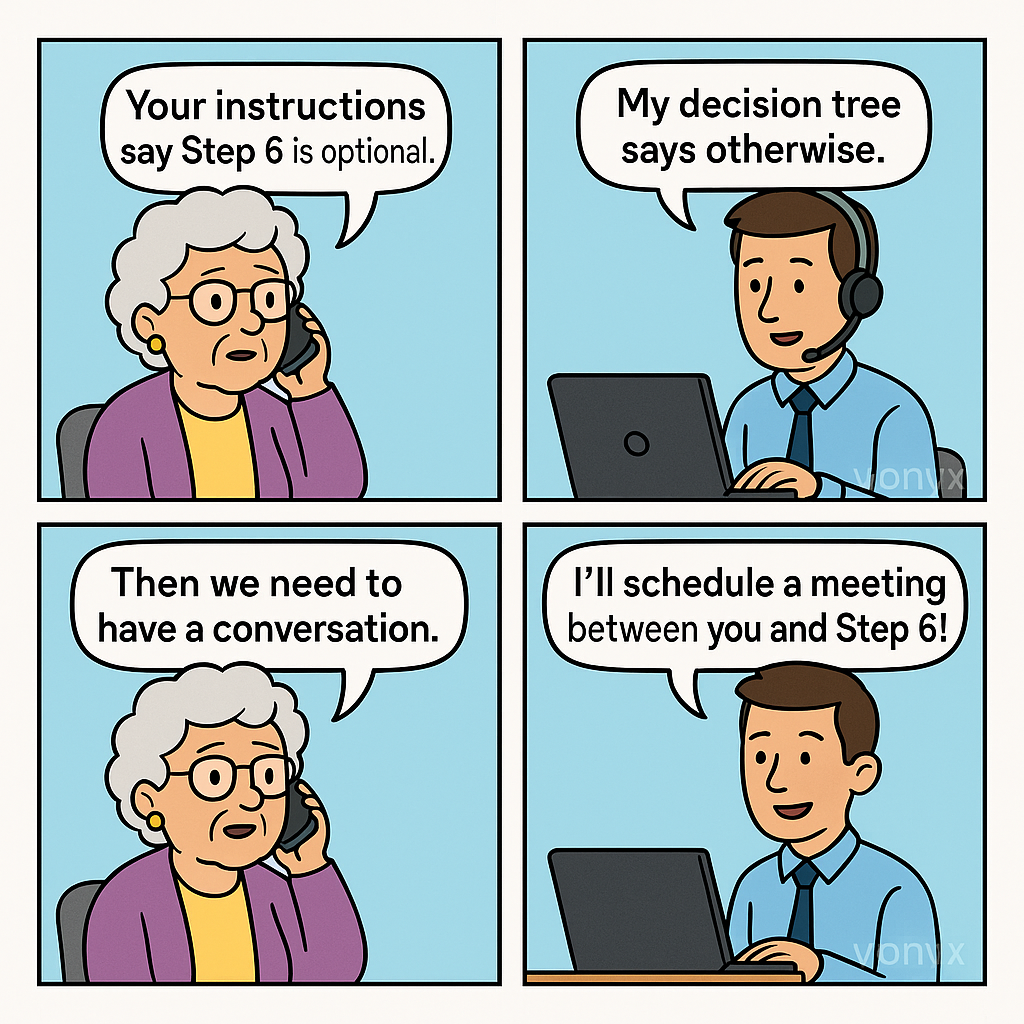
Grandma: “Your instructions say Step 6 is optional.”
Agent: “That’s what the text says. The decision tree says otherwise.”
Grandma: “Then the decision tree and I need to have a conversation.”
Agent: “I’ll schedule a meeting between you and Step 6.”
Grandma isn’t wrong — optional steps in support scripts are rarely truly optional. They’re more like “highly recommended suggestions we pretend you don’t have to do.” In fact, this tension between what’s written and what actually works is exactly why companies rely on structured guidance tools like Yonyx Interactive Decision Trees.
Why Support Instructions Label Steps as “Optional”
In support documentation, “optional” often means:
- This step fixes the problem 70% of the time
- Not everyone needs it, but you probably do
- We can’t legally force you, but we can strongly encourage you
- Skipping it may cause you to return to Step 1 later with a deeper sense of regret
Writers soften the language to avoid sounding demanding. Unfortunately, Grandma interprets this as an invitation to negotiate.
Why the Decision Tree Disagrees
Unlike human-written instructions, decision trees don’t deal in nuance. They don’t soften edges. They don’t use diplomatic phrasing. They deal in cold, clinical patterns of human behavior.
If Step 6 appears “optional” in text but mandatory in the flow, it’s because the tree has learned:
- Users skip steps whenever they’re allowed to
- Optional steps are skipped even faster
- Skipping Step 6 causes issues to reappear later in the flow
- Support agents end up doing twice the work when people skip it
The decision tree isn’t judging Grandma — it’s just being honest about what actually fixes the problem. It’s the same philosophy behind modern self-service experiences and FAQ automation platforms like AskYourFAQ, which turn vague instructions into guided, fail-safe flows.
Grandma vs the Decision Tree
Grandma is not intimidated. She has raised children, assembled furniture, survived software updates from the 90s, and installed printers that required ritualistic patience.
She’s ready to challenge Step 6 head-on.
- Step 6 calls itself optional
- The decision tree says it’s mandatory
- Grandma wants answers
It’s the kind of standoff only great troubleshooting legends are made of.
Conclusion
Whether it’s optional or not, Step 6 exists because someone once skipped it and created a spectacular disaster. The decision tree remembers, documents, and enforces — even when the written instructions tiptoe around the truth.
But Grandma’s right about one thing: sometimes, the steps and the logic behind them need a conversation. And if anyone can negotiate with Step 6, it’s her.