-

“Gently Power-Cycle the Router.” — When Decision Trees Detect Tone Better Than Humans
Some troubleshooting moments escalate faster than the technology they’re meant to fix. And few interactions demonstrate this better than a household attempting to “gently” follow instructions: Agent: “My decision tree says, Now gently power-cycle the router.”Husband: “Honey, gently power-cycle it.”Wife: “I am being gentle!”Agent: “I picked up on that tone — she is not being…
-
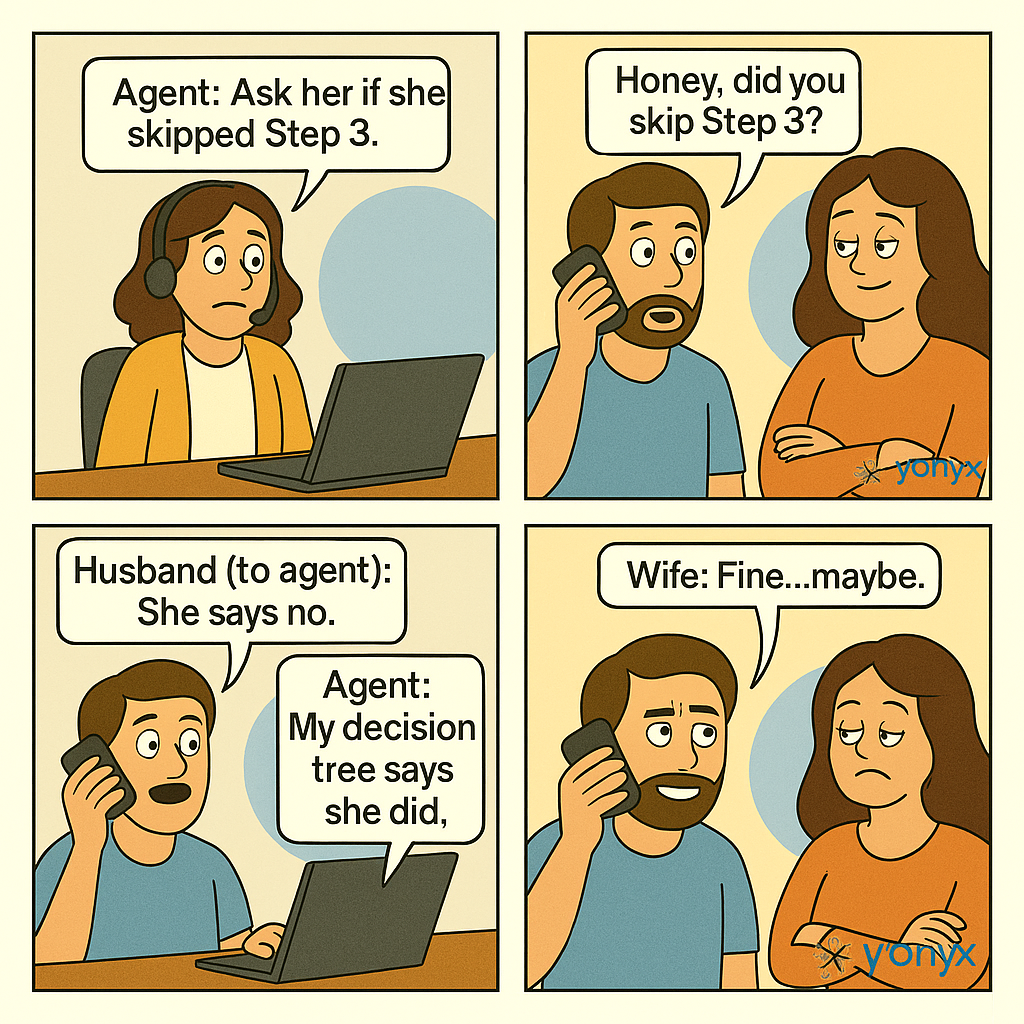
“Did You Skip Step 3?” — When Decision Trees Know the Truth Before Anyone Admits It
Sometimes troubleshooting involves more than just technology — it becomes a full family negotiation. Few scenarios capture this better than the moment when logic, honesty, and a decision tree collide. Agent: “Ask her if she skipped Step 3.”Husband: “Honey, did you skip Step 3?”Wife: “Of course not.”Husband (to agent): “She says no.”Agent: “My decision tree…
-
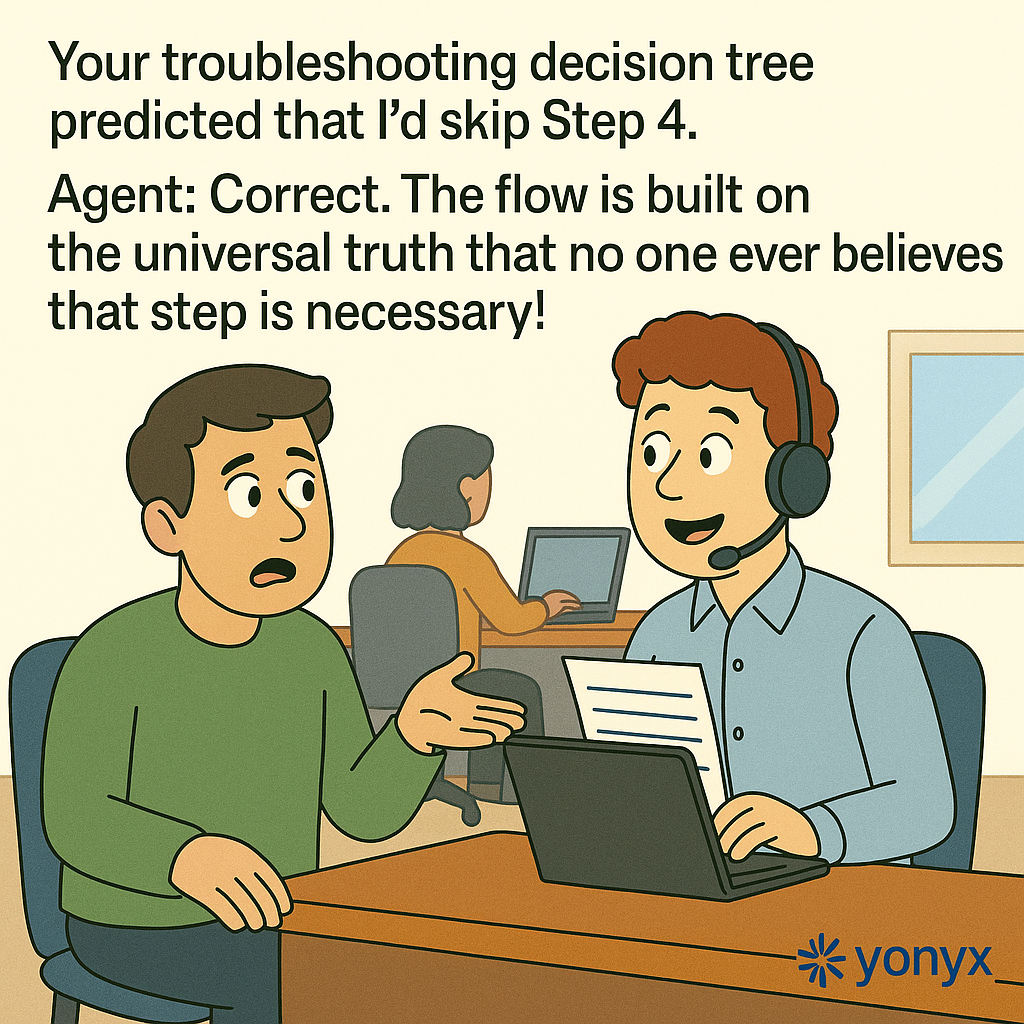
“You Predicted I’d Skip Step 4?” — Why Decision Trees Know Us Better Than We Do
There comes a moment in every troubleshooting flow when the customer realizes the system knows their habits a little too well. Customer: “Your troubleshooting decision tree predicted that I’d skip Step 4.” Agent: “Correct. The flow is built on the universal truth that no one ever believes that step is necessary!” And with that, the…
-

“Why Does Your Decision Tree Know My Mistakes?” — The Secret History Behind Every Wrong Turn
Every now and then, a customer stumbles onto a moment in troubleshooting that feels a little too accurate — almost like the system is reading their mind. Customer: “Why does your interactive decision tree know exactly what I’m about to do wrong?” Agent: “Because every incorrect turn you can take is already documented by someone…
-
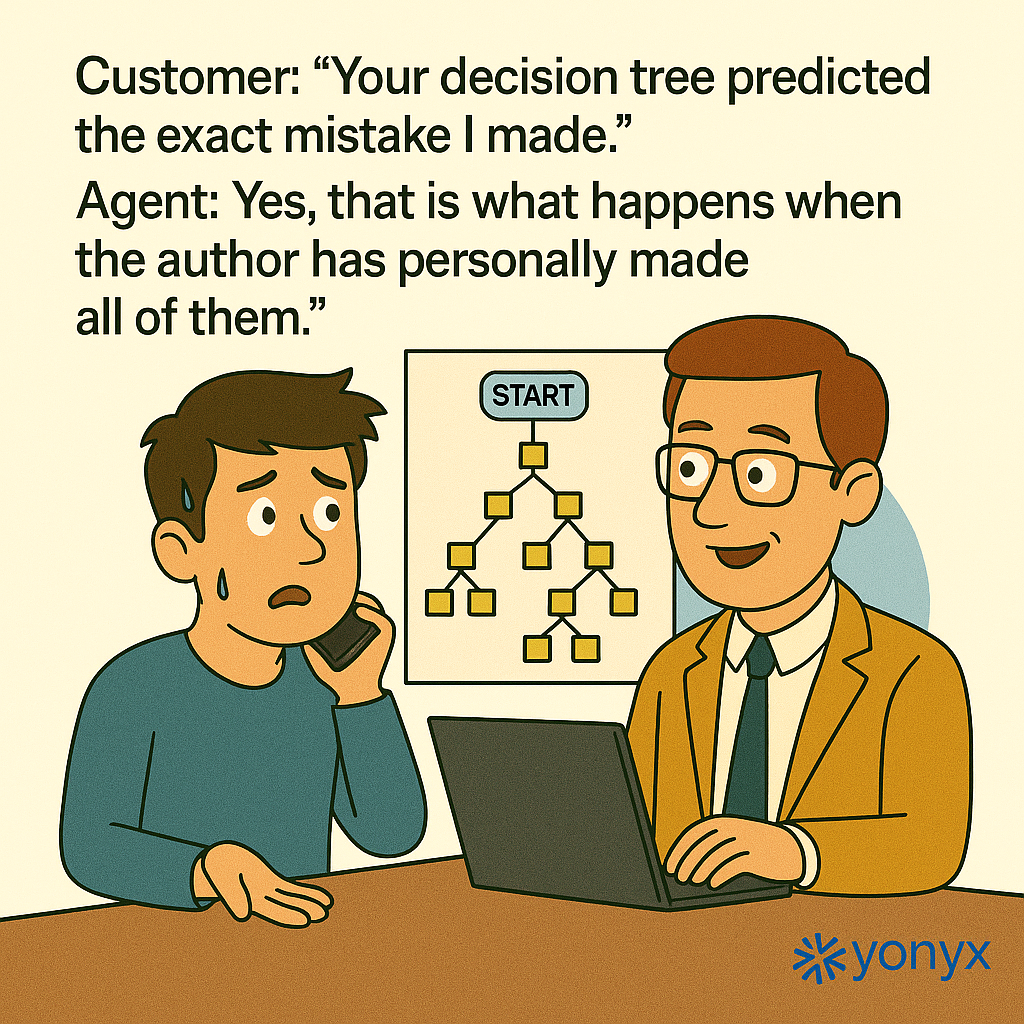
“Your Decision Tree Predicted My Mistake.” — When Experience Becomes Logic
Some troubleshooting experiences feel uncanny — almost too accurate. Like when a customer realizes the decision tree knew exactly what they were going to do wrong. Customer: “Your decision tree predicted the exact mistake I made.” Agent: “Yes, that is what happens when the author has personally made all of them.” And just like that,…
-
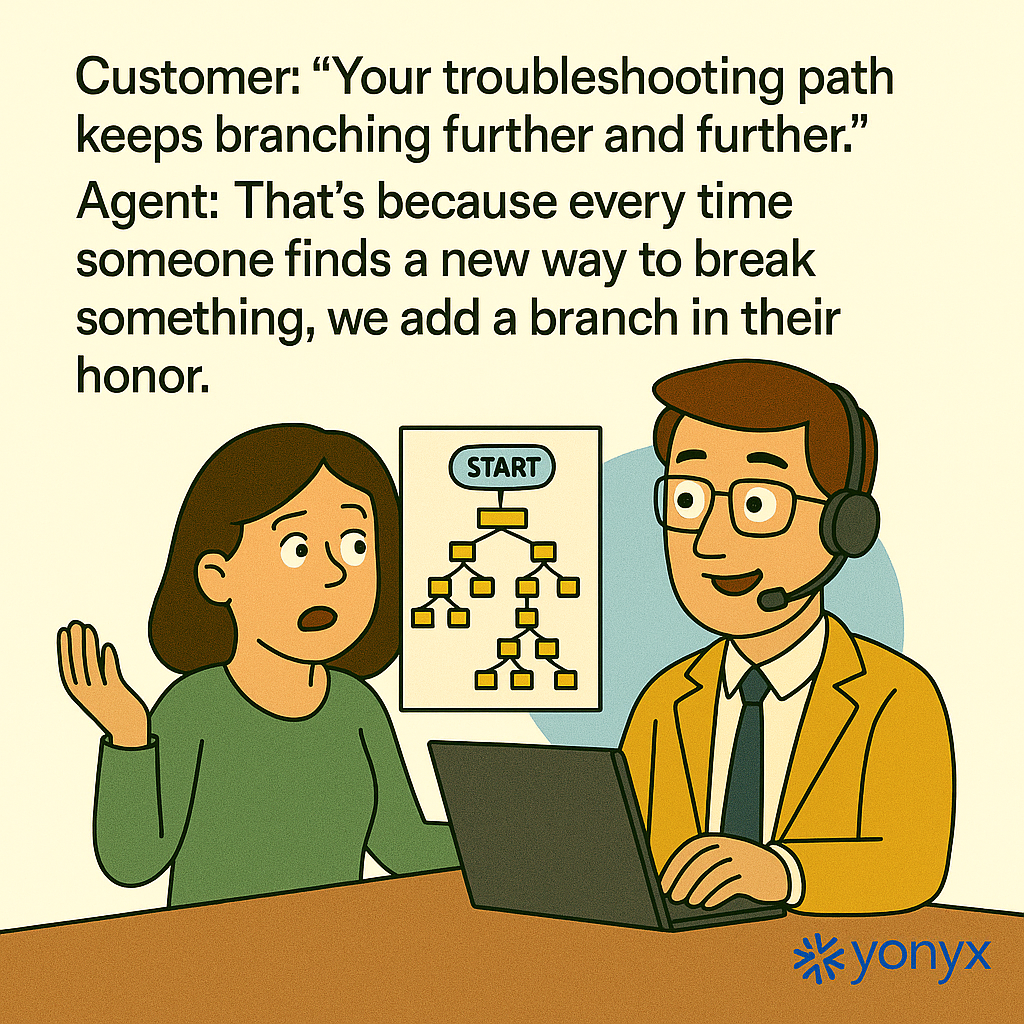
“Your Troubleshooting Path Keeps Branching!” — Why Decision Trees Grow Faster Than Problems Get Fixed
Some customers think troubleshooting is simple. But anyone who has worked in support knows the truth: humans keep inventing new ways to break things. Which leads to this perfectly reasonable exchange: Customer: “Your troubleshooting path keeps branching further and further.” Agent: “That’s because every time someone finds a new way to break something, we add…
-
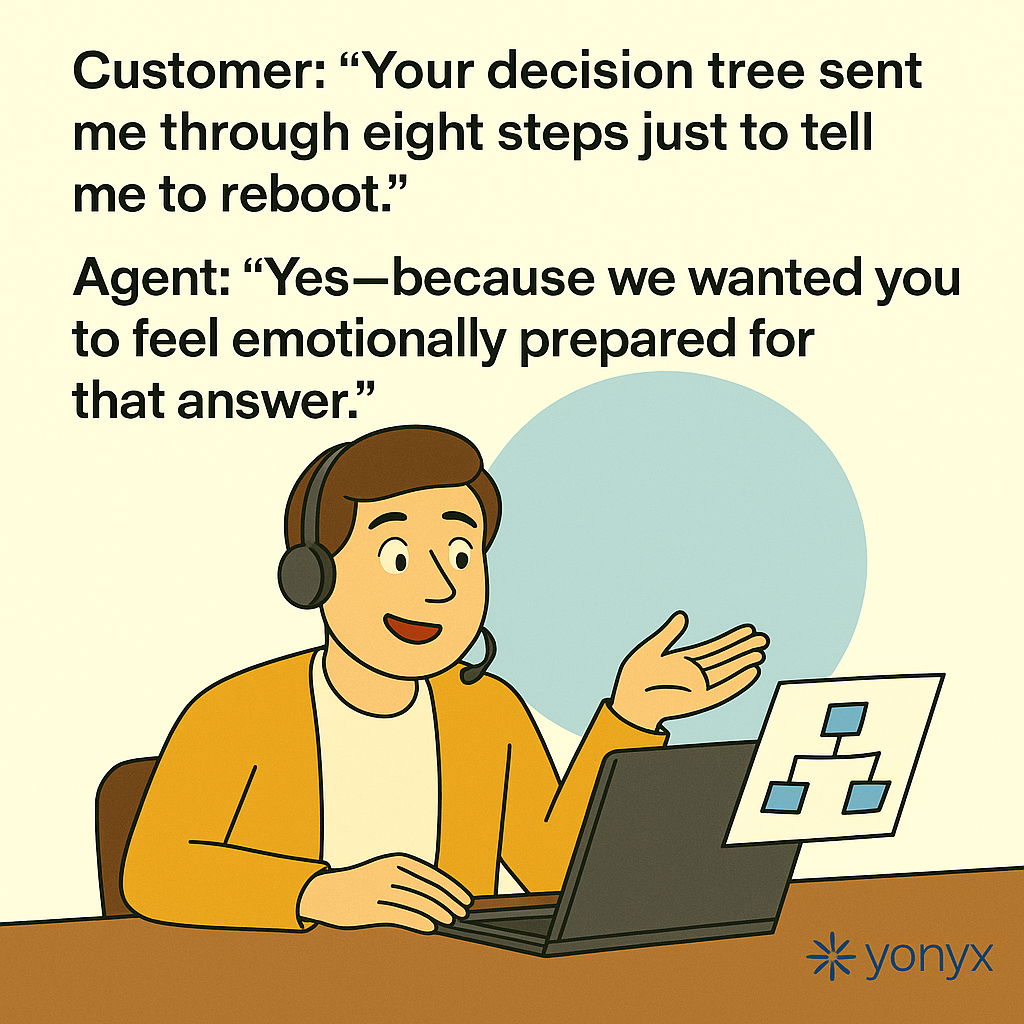
“Eight Steps Just to Reboot?” — Why Decision Trees Sometimes Prepare You Emotionally First
If there is one universal truth in tech support, it’s this: the answer is often “please reboot.” But customers rarely appreciate hearing that upfront, especially after a problem has already tested their patience. Which is why this exchange feels so familiar: Customer: “Your decision tree sent me through eight steps just to tell me to…
-
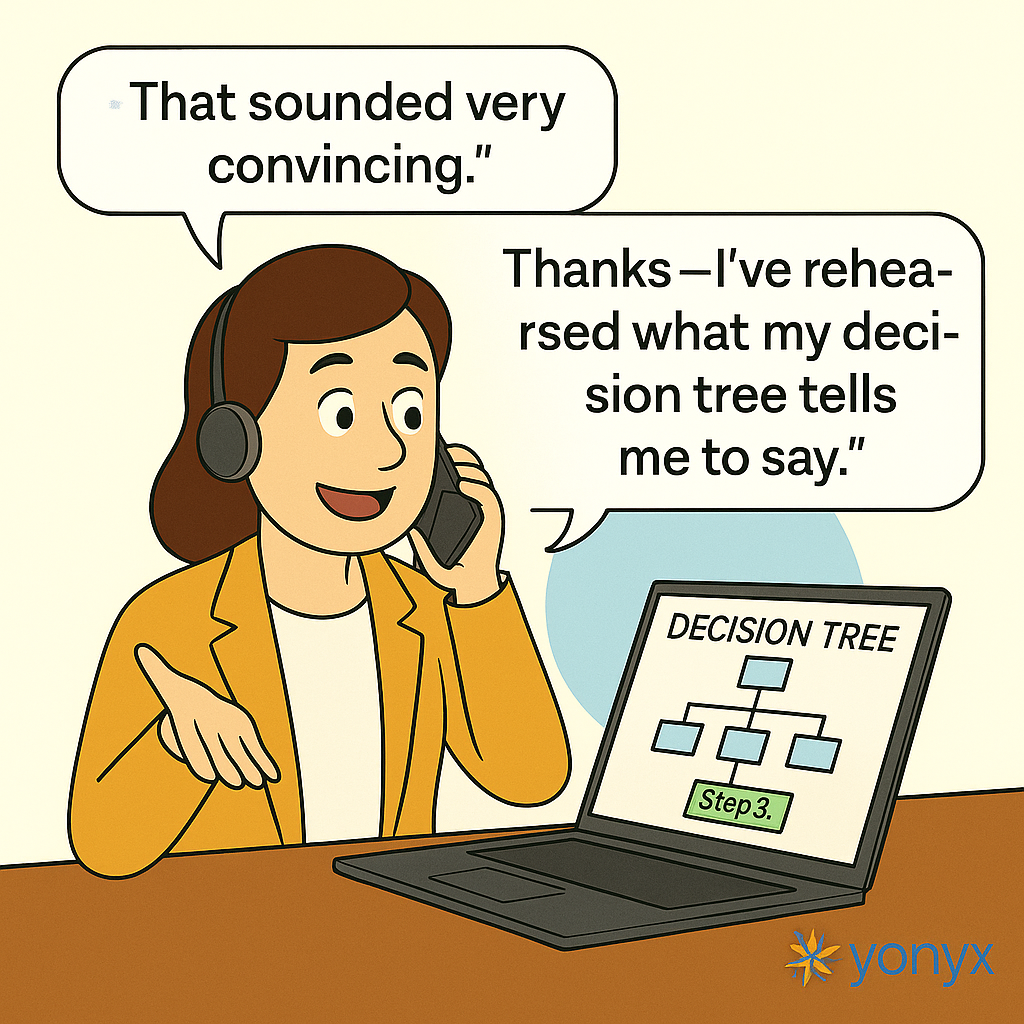
“That Sounded Very Convincing.” — “Thanks, I’ve Rehearsed What My Decision Tree Tells Me to Say!”
There’s a special moment in every support or sales call when the customer stops, considers your answer, and says: Customer: “That sounded very convincing.”Agent: “Thanks — I’ve rehearsed what my decision tree tells me to say!” And suddenly, the truth is revealed: confidence isn’t magic… it’s logic. Because behind every calm, persuasive agent is a…
-
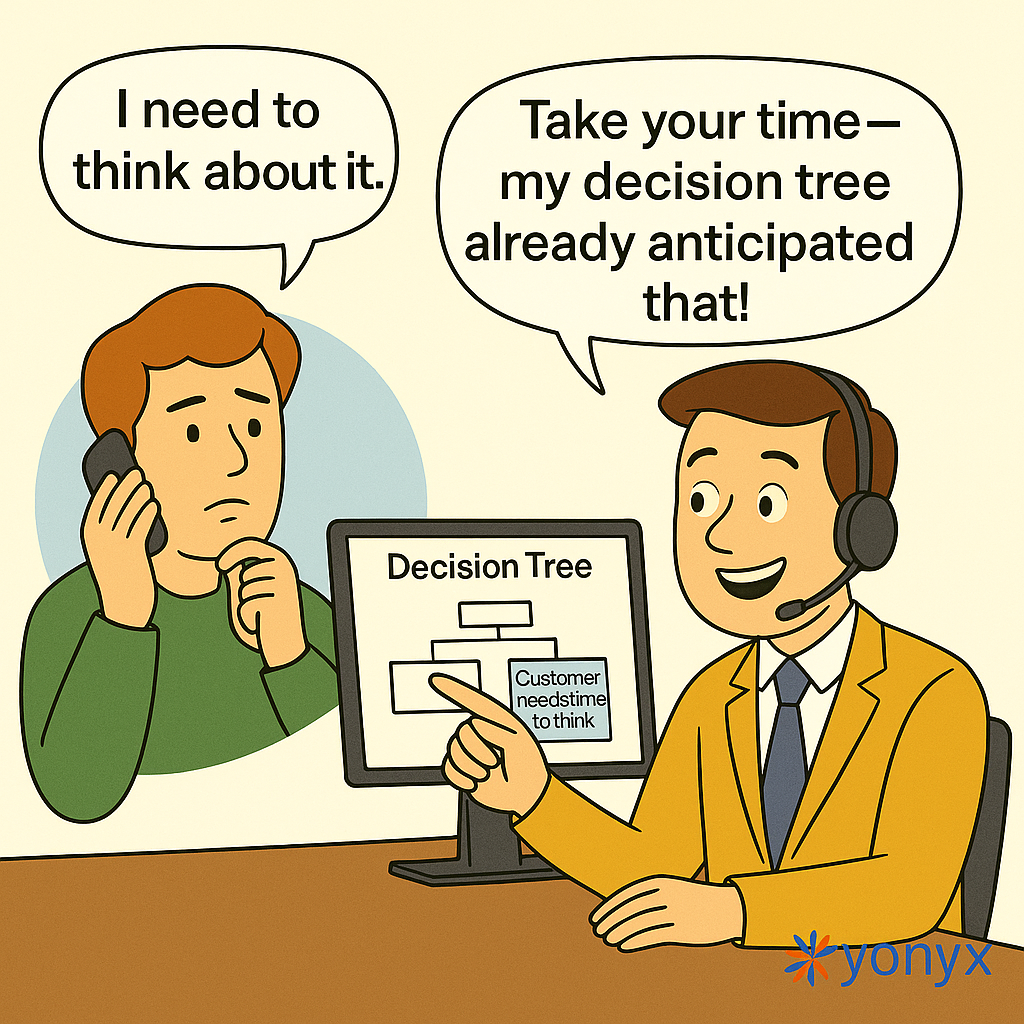
Decision Tree Sales Objection Handling Techniques
Some sales objections feel timeless—like they’ve existed since the first human tried to upsell fire to a neighbor. One of the all-time classics is the gentle, polite, but firm escape hatch: Customer: “I need to think about it.” Sales Rep: “Take your time — my decision tree already anticipated that!” In other words: “You’re not…
-
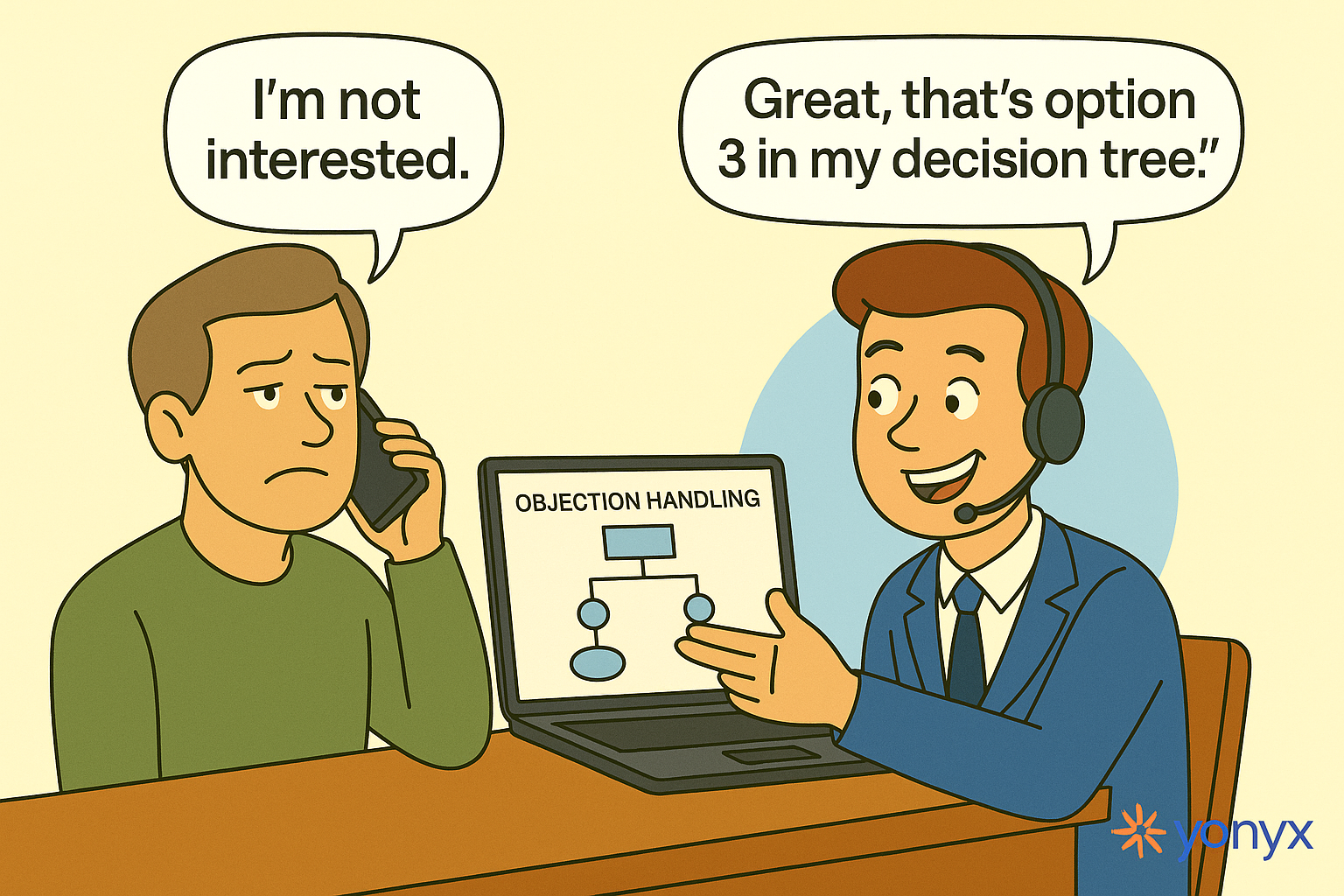
“I’m Not Interested.” — “Great, That’s Option 3 in My Decision Tree!”
Every sales rep has heard the classic shutdown: “I’m not interested.” But only a seasoned SDR armed with an interactive decision tree can reply with the type of confidence that turns rejection into a workflow checkpoint. One rep summed it up perfectly: Customer: “I’m not interested.” Sales Rep: “Great, that’s option 3 in my decision…
