Over 70% of online complaints go unanswered, and each missed reply intensifies customer frustration. Not because teams don’t care, but because messages scatter across too many channels. Important conversations slip through. Follow-ups get lost. Opportunities disappear before anyone notices. It’s a costly gap in the customer journey.
This happens when engagement depends on effort instead of structure. Without a clear way to connect, retain, and grow your audience, even skilled teams struggle to stay consistent.
The fix is straightforward. A focused digital customer engagement approach brings clarity, responsiveness, and measurable improvement to every interaction.
What Is Digital Customer Engagement?
Digital customer engagement refers to the ongoing interaction between a brand and its customers through digital channels, such as websites, mobile apps, social media, email, and chatbots. It’s not just about being present online; it’s about creating meaningful, two-way communication that adds value to the customer’s experience.
A strong digital engagement approach ensures that every digital touchpoint, from a product page to an Instagram reply, feels cohesive, relevant, and human. This engagement is powered by digital customer engagement platforms that unify data, automate responses, and help businesses deliver real-time personalization at scale.
What Digital Engagement Involves
Modern digital engagement is a system of connected experiences. It includes:
- Interactions across digital channels, ensuring consistency and quality, whether customers reach out through a mobile app, social media message, or web chat.
- Use of engagement tools and platforms, employing CRM systems, chatbots, and marketing automation to anticipate needs and simplify interactions.
- Real-time personalization, tailoring content, offers, and communication based on a customer’s context, behavior, and preferences.
The goal is to make every digital interaction seamless and relevant, not overwhelming or repetitive.
What Fuels Digital Brand Engagement
The most engaging brands don’t just communicate, they connect. Several key forces drive digital customer engagement today:
- AI and analytics that interpret customer behavior and enable smarter personalization.
- Loyalty programs that reward meaningful interaction, not just transactions.
- Interactive content like quizzes, videos, and surveys that transform passive browsing into active participation.
- Community and social listening, which help brands hear customer voices and adapt based on collective feedback.
These elements turn engagement into a living, evolving relationship between the brand and its audience.
Top 10 Strategies to Boost Digital Customer Engagement
Strengthen your digital presence with proven methods that turn passive audiences into active, loyal participants.
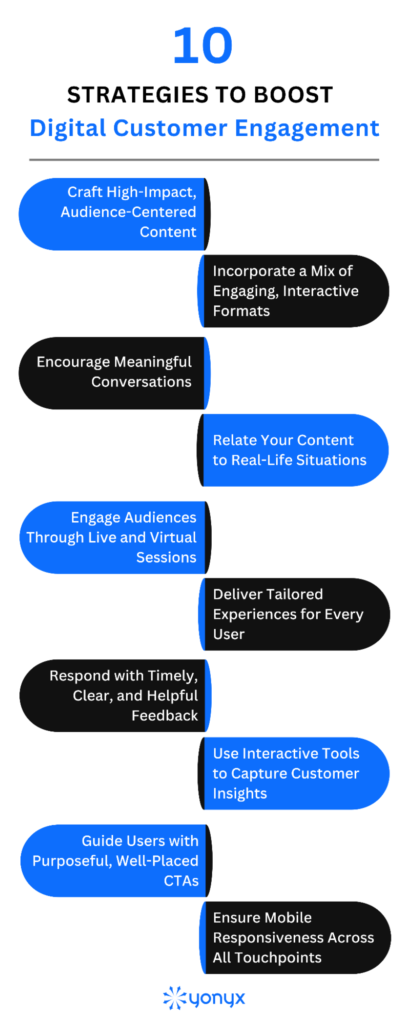
1. Craft High-Impact, Audience-Centered Content
Focus on content that answers direct questions, removes friction, or helps users complete a task.
Example: A fintech brand offering short “how-to” budget breakdowns that help users take immediate action.
2. Incorporate a Mix of Engaging, Interactive Formats
Mix formats: videos, polls, quizzes, and carousels to match different user preferences and boost engagement depth.
Example: A wellness brand sharing weekly Instagram polls to learn customer challenges and tailor upcoming content.
3. Encourage Meaningful Conversations with Your Audience
Use thoughtful prompts and scenario-based questions to learn directly from your audience.
Example: A SaaS company asking, “What’s the one workflow you’d automate first?” to understand customer pain points.
4. Relate Your Content to Real-Life Situations
Tie messages to real situations, data, or moments your audience experiences.
Example: A travel app showcasing how users saved money during peak-season trips using real booking data.
5. Engage Audiences Through Live and Virtual Sessions
Workshops, AMAs, demos, and Q&As create trust and allow users to ask questions in the moment.
Example: A skincare brand hosting monthly “routine check-ins” to guide users through product applications.
6. Deliver Tailored Experiences for Every User
Tailor recommendations, onboarding steps, and follow-ups based on individual behavior, not broad segments.
Example: An e-commerce store suggesting complementary items based on a customer’s purchase history.
7. Respond with Timely, Clear, and Helpful Feedback
Users move between email, social, live chat, and in-app messages. Fast, structured responses prevent gaps that occur when teams juggle too many platforms.
Example: A subscription service notifying users when their usage drops and offering tips to get more value.
8. Use Interactive Tools to Capture Customer Insights
Short surveys, emoji sliders, and micro-feedback widgets gather sentiment at the moment of interaction.
Example: A learning platform using a “rate this lesson” slider after each module to refine content quality.
9. Guide Users with Purposeful, Well-Placed CTAs
Use direct next steps, no pressure, no clutter, to help users move forward with confidence.
Example: A marketing agency ending a blog with “Download the checklist to apply these steps today” to encourage immediate action.
10. Ensure Mobile Responsiveness Across All Touchpoints
Most engagement now happens on mobile; a seamless experience reduces drop-offs and improves conversions.
Example: A retail brand optimizing product pages for quick scrolling, faster load times, and tap-friendly buttons.
How to Measure Digital Engagement
Measure what truly matters, from clicks to conversations. Tracking key digital engagement metrics helps refine your strategy, enhance customer experiences, and drive smarter, data-backed decisions for lasting online success.
Core Metrics for Digital Engagement
A balanced digital engagement measurement framework blends behavioral, interactional, and sentiment-based indicators. Key metrics include:
- Session Duration & Bounce Rate: These metrics reveal how long visitors stay on your digital properties and whether they’re finding what they came for. Longer sessions often signal relevant, engaging experiences, while high bounce rates can indicate disconnects or usability gaps.
- Scroll Depth: This measures how far users travel through your page or app screen, an indicator of content relevance and attention span.
- Email Open and Click Rates: For campaigns, these metrics reflect interest and clarity. A high open rate often signals effective subject lines, while click-through rates indicate strong message alignment with intent.
- Chatbot Interaction and Social Media Engagement: Track not only how often customers engage with bots and posts but also the quality of those interactions, such as resolution rate, sentiment, and time to response.
Together, these core measures create a full picture of how customers engage digitally, from first touch to ongoing relationship.
Digital Engagement Tools & Platforms
Accurate measurement depends on having the right digital engagement tools. These platforms consolidate data from multiple sources and present engagement insights in real time.
- CRM Systems: Centralize customer data and track interactions across touchpoints, helping you connect engagement metrics to sales and satisfaction outcomes.
Examples: HubSpot, Salesforce, Zoho CRM - Engagement Dashboards: Offer unified views of performance, helping teams monitor trends and respond quickly to changes in customer behavior.
Examples: Google Analytics 4, Mixpanel, Amplitude, Tableau - Heatmaps: Visualize how users interact with websites or apps, where they click, scroll, or hesitate, turning raw data into clear behavioral insight.
Examples: Hotjar, Crazy Egg, Microsoft Clarity. - AI Analytics Tools: Enable deeper understanding by identifying hidden patterns, predicting churn, or surfacing opportunities for more personalized interactions.
Examples: Google Cloud Vertex AI, IBM Watson Analytics, Pendo, Mixpanel Insights
These tools bring structure and clarity to complex engagement data, making it easier to act with precision and purpose.
The Role of AI & Automation
AI and automation reshape how brands understand and respond to customer behavior in real time, making engagement faster and more adaptive.
Predictive Personalization
- AI identifies patterns across channels to anticipate needs and recommend content or offers before a user asks.
Real-Time Customer Engagement
- Automated workflows trigger immediate follow-ups, such as sending order tips right after a purchase or offering support when a user hesitates on a checkout page.
Automated Engagement Triggers
- Behavior- or time-based prompts re-engage inactive users, welcome first-time visitors, or guide users through key steps.
Example: A subscription app detects when a user repeatedly revisits a feature without completing setup. An automated in-app message appears with a short tutorial video, reducing confusion and improving activation rates.
When not to automate
Avoid automation when the situation involves sensitive issues, billing disputes, complaints, cancellations, or emotionally charged topics, where a human response builds more trust and reduces friction.
How to Connect with Your Audience
Build genuine relationships online by focusing on authenticity and value. Connecting with your audience means listening, responding thoughtfully, and creating digital experiences that feel personal, relevant, and consistently human.
Building Genuine Connections
Across the online world today, people aren’t simply following brands; they’re drawn to the ones that feel connected to their real experiences. Successful online customer engagement starts with authenticity: showing up consistently, communicating transparently, and delivering value beyond the product.
The foundation of meaningful digital connection lies in listening first, understanding what your audience cares about, how they express themselves online, and what experiences make them feel recognized and valued.
Creating Authentic Experiences
Authenticity is not a marketing tactic; it’s a mindset. It means shaping interactions that reflect your brand’s principles and your customers’ realities.
Ways to foster authenticity include:
- Sharing stories, not scripts: Replace generic content with honest insights, behind-the-scenes views, or customer spotlights.
- Encouraging participation: Invite feedback, polls, or open questions that turn audiences into contributors.
- Following through: Real authenticity comes when brands act on customer input and acknowledge it publicly.
When your audience sees consistency between your message and your actions, engagement grows organically.
How User-Generated Content Builds Communities
One of the most effective answers to how to engage with customers online is to let them shape the story. User generated content (UGC), from reviews and testimonials to photos and videos, builds social proof and trust faster than any ad campaign.
Encouraging customers to create and share content around their experiences turns them into advocates. Similarly, nurturing online communities, through forums, groups, or social spaces, gives customers a platform to connect as well as your brand.
Community-driven engagement isn’t just scalable; it’s self-sustaining when done right.
Utilizing Digital Consumer Engagement Channels
Each digital touchpoint offers a different mode of connection. The key is using the right channels for the right purpose, while maintaining tone and relevance across them all.
- Email Marketing: Still one of the most personal and direct ways to communicate. When crafted thoughtfully, emails can inform, delight, or re-engage, not just sell.
- Live Chat and Chatbot Tools: Immediate, context-aware support demonstrates attentiveness. Combined with intelligent automation, chat can deliver timely help while collecting valuable insight for future interactions.
Example: Intercom, Zendesk Chat, Drift, Tidio, and Freshchat. - Social Media Stories and DMs: Ephemeral and conversational formats like Instagram Stories or direct messages enable informal, humanized engagement. They allow brands to respond quickly, acknowledge feedback, and share micro-moments of value.
These digital consumer engagement channels together form a continuous dialogue, one where customers feel seen and heard wherever they are.
Personalizing Outreach with Data
Data transforms communication from generic to relevant. Personalization is not about over-targeting; it’s about using insight responsibly to make interactions more useful.
- Segment audiences based on needs and preferences.
- Use behavioral data to tailor timing and tone.
- Integrate context, such as purchase history or recent interactions, to make each message feel considered, not automated.
Smart personalization respects privacy while enhancing the human side of online customer engagement. It demonstrates that a brand understands its audience enough to respond with relevance, not repetition.
How to Retain Your Audience
Keep your audience engaged by nurturing trust and consistency. Retention grows when you deliver ongoing value, listen to feedback, and use digital engagement practices that strengthen long-term customer relationships.
Turning Engagement into Lasting Relationships
Connecting with customers is just the beginning; retention is where relationships mature. Effective digital engagement practices are designed not only to attract attention but to sustain it through relevance, respect, and reciprocity.
Retention means moving beyond transactions to create emotional and practical reasons for customers to keep coming back. When engagement evolves into a consistent dialogue, it builds trust, the cornerstone of a strong digital customer relationship.
Loyalty Programs and Rewards
Loyalty isn’t built on discounts alone. It’s nurtured through meaningful appreciation. Modern loyalty programs focus on recognizing behaviors that reflect genuine involvement, such as repeat engagement, referrals, or thoughtful feedback.
Reward structures should reinforce the values that define your brand. Whether through exclusive experiences, early access, or recognition-based tiers, the goal is to make customers feel genuinely valued, not simply retained.
When executed well, loyalty programs create a sense of belonging, a shared narrative between the customer and the brand.
Nurturing Sequences That Sustain Engagement
Retention depends on sustained connection. Nurturing sequences, such as personalized email series, onboarding journeys, or post-purchase communications, maintain relevance without overwhelming your audience.
These sequences work best when they:
- Provide evolving value based on where the customer is in their journey.
- Use tone and timing that reflect customer intent.
- Integrate data to ensure the experience feels adaptive, not automated.
Continuous engagement keeps your brand visible and valuable, turning one-time interactions into ongoing relationships.
Feedback Loops: Surveys, NPS, and Reviews
Listening is one of the most powerful digital engagement practices. Gathering and acting on customer feedback shows that you value their voice.
- Surveys help uncover expectations and hidden friction points.
- Net Promoter Scores (NPS) quantify loyalty and satisfaction.
- Reviews offer public proof of trust and allow you to respond transparently.
When brands close the loop by addressing concerns and sharing how feedback led to improvements, it strengthens confidence and signals ga enuine partnership.
Lifecycle-Based Content and Offers
Retention thrives when content aligns with the customer’s stage in the journey. Lifecycle-based marketing ensures that every message feels timely and relevant.
Examples include:
- Educational content for new users.
- Value-driven offers for active customers.
- Re-engagement messages for dormant ones.
This approach blends personalization with timing, reinforcing the digital customer relationship across its natural rhythm, from onboarding to advocacy.
How to Grow Your Audience
Grow your audience by turning engagement into momentum, through genuine advocacy, smart scaling, and community-driven strategies that expand reach while deepening real customer connections.
Expanding Through Trust and Value
Growth isn’t just about reaching more people; it’s about reaching the right people and creating lasting value once they arrive. A thoughtful digital engagement strategy focuses on building relationships that scale sustainably, not just expanding visibility.
True audience growth comes from alignment: when your brand’s purpose connects naturally with your audience’s evolving needs and aspirations.
Turn Loyal Customers into Brand Advocates
Your most credible advocates are your existing customers. When they feel genuinely satisfied, they become an organic channel for growth. Encourage them to share their experiences through referral programs, testimonials, or community spotlights.
Referrals work best when they feel like genuine recommendations rather than transactional exchanges. Recognize and reward your advocates meaningfully, ensuring the referral process feels natural, simple, and aligned with their trust in your brand.
Scale with Marketing Automation and Retargeting
As your audience grows, maintaining consistent and personalized engagement becomes more complex. Automation helps scale communication without losing the human touch.
A refined digital customer engagement strategy uses:
- Marketing automation to nurture leads and maintain relevance across the customer journey.
Tools: ActiveCampaign, Marketo, Mailchimp, Customer.io - Retargeting to reconnect with visitors who showed interest but didn’t convert, offering them content or experiences that match their intent.
These tools help brands respond faster and stay present, not intrusive, as customers move between digital touchpoints.
Partnerships and Influencer Collaboration
Collaboration extends your reach into new communities that already trust their creators. Partner with complementary brands, organizations, or influencers whose audiences align with your values.
The most effective collaborations are transparent, value-driven, and co-created. Instead of one-off sponsorships, focus on building mutual narratives, shared content, joint events, or educational initiatives that deliver authentic benefits to both audiences.
Partnerships are most powerful when they add credibility, not just exposure.
Community Building and Expansion
Communities are at the core of modern digital engagement strategy. Whether through social groups, forums, or online hubs, communities give your audience a space to connect, not just your brand.
To grow effectively, nurture these spaces with genuine interaction:
- Encourage peer-to-peer support.
- Recognize active contributors.
- Facilitate meaningful discussions instead of one-way promotions.
A thriving community becomes a living extension of your brand, one that continues to grow through shared purpose and participation.
Grow with Your Audience
Sustainable growth happens when you evolve alongside your audience. This means:
- Evolving content and offerings to match changing customer needs and expectations. Keep your communication relevant by tracking feedback, market shifts, and behavioral data.
- Transparency and co-creation invite customers into your creative process. Whether it’s product feedback sessions or community idea boards, collaboration fosters loyalty and trust.
Growth isn’t static; it’s iterative. A strong digital customer engagement strategy recognizes that your audience isn’t a target, it’s a community in motion.
Conclusion: Strengthening Digital Customer Relationships
Most teams juggle too many channels, and that creates gaps in engagement. A structured digital customer engagement approach closes those gaps by organizing interactions, responses, and insights across every touchpoint.
When you prioritize clarity, consistency, and relevance, engagement becomes measurable and repeatable. The result is simple: fewer missed moments and stronger, longer-lasting customer relationships.
Related Reads
FAQs on Digital Customer Engagement
1. What’s the difference between digital engagement and customer experience?
Digital engagement focuses on ongoing interactions across online channels, while customer experience covers the entire journey, from first touch to long-term loyalty. Engagement is about communication; experience is about perception. Both work together to strengthen customer satisfaction and retention.
2. How often should brands update their digital engagement strategy?
Most brands revisit their digital engagement strategy every quarter. Frequent updates help teams adapt to shifting customer behaviors, new platform features, and seasonal demand changes. Reviewing performance data regularly ensures engagement efforts stay relevant, efficient, and aligned with growth goals.
3. What role does content frequency play in digital engagement?
Posting too rarely reduces visibility, while posting too often can overwhelm audiences. The goal is consistency. Most brands find success with a predictable cadence, such as weekly blogs, daily social posts, or monthly newsletters, based on audience habits and channel performance insights.
4. Can small businesses succeed with digital customer engagement?
Absolutely. Small businesses often excel because they communicate more personally and respond faster. Simple tools, email newsletters, automated replies, and social listening can significantly improve engagement. The key is focusing on genuine value and consistent communication, not large budgets or complex technology.
5. How do you keep digital engagement human while using automation?
Automation works best when it supports, not replaces, real human connection. Personalizing messages, adding conversational tone, and using automation only for routine tasks keep interactions warm and relatable. The aim is efficient communication that still feels thoughtful, timely, and customer-centered.