Are you looking to enhance your customer interaction strategies? That’s exactly why we’re here.
Customers expect more than products; they expect experiences. Digital engagement is no longer optional; it’s the foundation of loyalty and growth. From personalized interactions to AI-powered support, the right strategies can turn one-time buyers into long-term, loyal customers.
Businesses must develop diverse methods for engaging customers across multiple platforms to build loyalty, drive sales growth, and achieve sustainability.
If you’re curious about any critical elements of your strategy that might have been overlooked, this article offers valuable insights to help you stay on track.
Here are the 8 Strategies to Enhance Digital Customer Engagement:
1. Personalized Customer Service
Effective e-commerce engagement strategies are strongly tied to individualized marketing. This involves using knowledge of preference parameters to create personalized encounters that carry the highest personal significance.
Here are two alternatives for integrating personalization into customer engagement:
Personalized Content
Deliver content that addresses each customer’s specific needs. Pay attention to their purchases and preferences, and personalize emails, website content, or product recommendations to improve their overall user experience.
According to Vocalcom, personalized homepage promotions can impact up to 85% of consumers’ purchasing decisions, while customized shopping cart recommendations can influence up to 92% of shoppers.
Personalized Interactions
Try to understand the character of buyers and assign them to agents who can communicate with them in a way that makes them comfortable.
Ask customers about their preferences for how they would like to be addressed and their preferred communication method.
Perform simple acts of kindness, such as checking up on customers’ appreciation after a purchase, or going beyond to exceed their expectations by sending personalized notes or even gifts on their birthdays.
2. Using Omnichannel Customer Service
Customers move easily from social media to apps to in-store visits. Omnichannel engagement ensures every touchpoint feels consistent. Map customer journeys and unify branding, messaging, and support across all channels to ensure seamless transitions.
You can ensure a consistent customer experience by adopting a digital client engagement approach that covers all channels and mapping out consumer journeys.
Using an Integrated Customer Engagement Platform
Make use of digital places such as:
- Emails
- Media
- Mobile apps
- Websites
Such a system may take different forms, including emails, media, mobile apps, and websites. It is meant to create the perfect customer journey.
To ensure customers move smoothly from one channel to another, keep messaging consistent and branding the same at all touchpoints.
Mapping Out the Customer Journey
Improve important milestones by creating customer journey maps. Personalize content to boost engagement and ensure a smooth transition in every interaction during a customer’s journey.
3. Modern Approaches to Engage Customers Across Various Digital Platforms
Interactive Chatbots and AI Assistants
These modern tools help streamline the customer experience, thus resulting in efficiency.
AI assistants can examine how their users behave or use their data to predict their future needs and offer them personalized suggestions. Additionally, interactive decision trees can aid in managing customer service in call centers.
Here are five well-known brands that utilize interactive chatbots as well as AI Assistants:
| Company | AI Implementation |
| Adobe | Adobe uses the Adobe Sensei AI system to power features across its whole product line. They also have a chatbot on their website that answers customers’ questions regarding their software products, technical problems, or getting through their services. |
| H&M | Customers are able to find H&M products, check if they are available, and receive styling tips from the chatbot accessible through Kik, the H&M official site, and other platforms. The chatbot employs natural language understanding to grasp customers’ queries and respond accordingly. |
| Starbucks | Starbucks introduced the Starbucks Barista chatbot into its app. This artificial helper will allow customers to place orders through voice commands or even typing. Customers’ likes are remembered, and the chatbot suggests things that can improve the customers’ experience as a whole. |
| Spotify | Spotify extensively uses AI to personalize music preferences and create user-generated playlists. The company has algorithms such as Discover Weekly and Release Radar, which use AI to create playlists based on users’ listening habits. |
| Sephora | On Facebook Messenger, Sephora’s chatbot is designed to offer personalized beauty guidance, product recommendations, and try-on experiences using augmented reality (AR).This is also done with their Color Match tool, which makes discovering your makeup shade easier for you. |
Engaging Mobile Experience
Mobile designs should incorporate techniques that ensure they function properly across different devices.
In addition, analyzing customer data and preferences enables the creation of tailored content and messaging for engagement purposes.
Furthermore, features like push notifications and in-app messaging can facilitate real-time connections among customers, thereby enhancing the user experience.
4. Interactive Content
To attract customers, businesses must go beyond static content and embrace interactive and immersive experiences that strengthen digital user engagement. A strong user engagement strategy not only captivates users but also fosters customer loyalty through personalization.
Here are four popular types of content that can greatly boost your content marketing strategy:
| Type | Purpose | Benefits | Usage Example |
| Polls and Surveys | To gather insights and opinions from your audience | • Engage users by asking for their input• Provide valuable data• Make customers feel heard | A survey on customer satisfaction or a poll about preferences for future product features |
| Quizzes | To entertain and educate users while collecting data | • Highly engaging and shareable• Capture users’ attention• Drive traffic | A quiz to help users find the best product for their needs or test their knowledge on a relevant topic |
| Interactive Infographics | To present data and information in an engaging way | • Interactive elements• Make complex information more accessible• Make information more memorable | An interactive infographic that allows users to explore data by clicking on different sections |
| Calculators and Tools | To provide personalized insights and solutions | • Highly practical and valuable• Encourage users to spend more time on your site | A cost calculator for a service or a tool to help users plan a project |
5. Utilizing Social Proof and User-Generated Content
Including proof and content generated by users can significantly boost trust, credibility, and engagement with your customer base.
Customer Reviews and Testimonials
You can showcase your customer ratings and testimonials on your website, social media platforms, and other online channels to increase trust.
We must motivate potential customers to make a purchase. The Spiegel Research Center’s findings suggest that incorporating user-generated content into a website can drive up conversion rates by as much as 270%.
User-Generated Content
Encouraging customers to share photos, videos, or posts about your brand in various media outlets not only enhances visibility but also fosters a sense of community and belonging. This approach helps people feel genuinely connected to your brand and to one another.
Brand engagement could rise by 28% and conversion rates driven through user-generated content, according to the Comscore Survey.
Moreover, entrepreneurs who use customer data can gain valuable insight into customers’ preferences, interests, needs, and requirements. Thus, they can tailor their marketing campaigns to meet customers’ expectations.
6. Data-Driven Engagement Strategies
To boost customer engagement, it’s essential to collect and analyze data from sources like CRM systems, website analytics, and social media to identify trends and patterns.
Here are some familiar customer data sources and the benefits they provide:
1. Surveys: Collecting feedback through surveys is a way to understand how satisfied customers are, identify areas for improvement, and make products or services better.
2. Website Analytics: It shows us how users interact with the site and what they prefer, which can help improve the website’s performance and enhance user experiences.
3. Monitoring Social Media: Monitoring customer interactions and feelings recorded on media platforms like Facebook, Twitter, or Instagram can provide valuable insights into consumer behavior, preferences, and emotions.
4. Customer Feedback: Feedback from sources such as reviews, social media comments, and email responses is also essential in measuring satisfaction levels and identifying areas for improvement.
5. Customer Relationship Management (CRM) Data: The Customer Relationship Management (CRM) data comprises contact information, purchase history, and demographic details that enable us to understand customer behavior as well as preferences.
6. Data Advertisements: Tracking metrics like ad impressions, clicks, and conversions reveals whether our advertising efforts are effective in shaping marketing campaigns.
7. Marketing Automation Platforms: Analyzing customer engagement with marketing content, such as email and click-through rates, helps us personalize customers’ experiences, enabling the fine-tuning of our marketing efforts.
8. Data Sources on Mobile Devices: Information from apps, location services, and device specifics can help enhance mobile app design to reach smartphone users through targeted messages.
9. Internet of Things (IoT) Data Insights: Home devices and wearables generate useful insights into consumer habits and preferences that can inform product development decisions.
10. Biometric Data for Security and Personalization: Leveraging data such as fingerprints or facial recognition can strengthen security measures while also enabling personalized customer interactions.
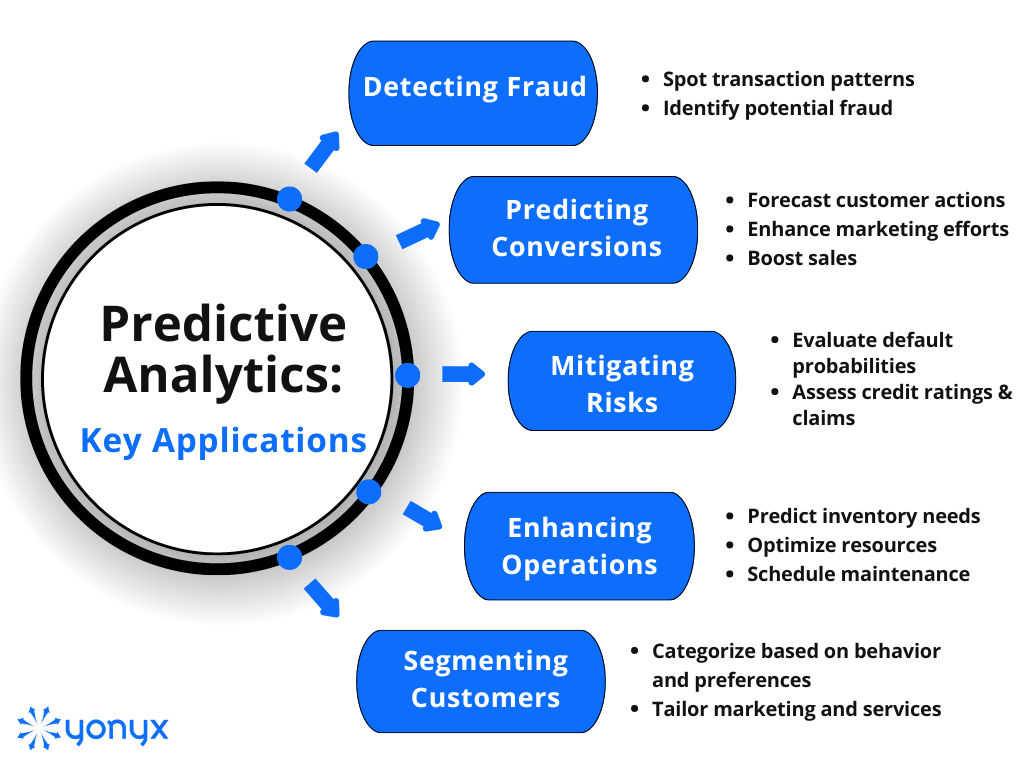
Understanding Predictive Analytics
Historical data forms part of analytics in addition to statistical models, which also include data mining techniques and machine learning for predicting future outcomes. This is done under data science, which aims to forecast scenarios by identifying patterns from past events.
This technique involves utilizing regression analysis, decision trees, neural networks, and deep learning to analyze datasets and gain insights. These insights can be invaluable and to serve as guides for practical and day-to-day decisions in various fields, such as finance, healthcare, retail, and hospitality.
7. Establishing a Customer-Centric Approach
Designing customer engagement is not just about having the right tools; it is essential to prioritize customers in all areas of an organization.
Brand loyalty requires companies to interact with their clients online on these platforms.
Here are 5 key strategies for transforming into a customer-focused business:
1. Prioritize Customers: Loyal existing customers form the backbone of your clientele. Focus your branding strategy on ensuring customer satisfaction to create a connection between your brand and excellent service.
2. Encourage Employee Engagement with Customers: Encourage employees to engage with customers through appreciation, friendly conversations, and personal touch. Monitor employee performance to ensure consistent customer support.
3. Offer Customer-Centric Products and Services: Provide products and services that meet the needs of both existing and potential customers. Enhance the shopping experience with conveniences like easy returns and various payment options.
4. Put Yourself in the Customer’s Shoes: Understand what customers like and dislike by putting yourself in their shoes. Develop innovative products to fulfill their needs and emphasize prioritizing customer service above all else.
5. Implement Proper Tools for Data Collection and Analysis: Use tools for data collection and analysis to track key metrics like NPS scores, customer feedback, and behavior patterns. Leverage these insights to enhance your offerings.
8. Measuring and Optimizing Your Digital Customer Engagement Strategy
To ensure your customer engagement plans are effective, you need to establish and track performance indicators (KPIs) while constantly improving your methods using insights gathered from data.
Assess the success of your strategies by measuring metrics such as customer satisfaction ratings, interaction levels, conversion rates, and customer loyalty value, among others, to identify areas for improvement.
By adopting a cycle of testing, measurement, and optimization driven by KPI performance and customer feedback, you can stay adaptable to changing customer preferences.
Here is a comparison table illustrating the effects of different digital customer engagement strategies:
| Strategy | Potential Impact |
| Personalization | Achieving levels of customer satisfaction and loyalty by providing customized experiences. |
| Omnichannel Marketing | Enhancing engagement and fostering customer loyalty through a multi-channel approach. |
| Interactive Chatbots | Improving customer service effectiveness and interaction with assistance. |
| Content Personalization | Raising engagement levels by delivering pertinent content. |
| Gamification | Driving user engagement and retention through gratifying interactions. |
| VR/AR Experiences | Creating customer involvement with immersive and inventive experiences. |
| User-Generated Content | Building community rapport and trust through user-generated content. |
| Predictive Analytics | Improving the capacity to anticipate and fulfill customer requirements enhances retention rates and satisfaction. |
Enhance Your Digital Customer Engagement
To improve customer connections, consider applying AI technology across several platforms, chatbots, interacting with virtual/augmented reality environments, and gamified methods like point systems.
Use evidence-supported content and incorporate user contributions to build trust and strengthen your digital customer relationship. Back up these efforts with analytics that are backed by data-use insights and always aim to enhance the customer experience.
Remember, achieving success depends on trying out, assessing, and enhancing your plans using data insights and customer feedback. Start now to build a digital engagement plan that connects with customers, strengthening brand loyalty, and leads to long-term business growth.
Related Reads
How to Use Call Center Quality Assurance Software in 2025
From Sales to Service: Essential Call Flow Strategies for Various Industry
FAQs on Digital Customer Engagement
1. How do I personalize customer experience without overwhelming them?
We think you should use consumer insights. Using analytics, understand individual preferences while affording clients a choice to adjust personalization settings.
Use profiling and dynamic content optimization techniques to deliver personalized experiences gradually and appropriately.
2. What are the recommended approaches for merging communication channels?
Ensure your branding, communication, and customer interactions are uniform across platforms. Implement omnichannel approaches using customer information and mapping their journey to provide tailored experiences at every interaction point. Give priority to channels based on customer preferences and behavior.
3. How can I evaluate the effectiveness of my customer engagement strategies?
Establish and monitor relevant KPIs, such as engagement rates, conversion rates, customer lifetime value, satisfaction levels, and Net Promoter Score (NPS).
Continuously examine data, conduct A/B testing on strategies, and refine campaigns based on insights for ongoing enhancement.
4. What is digital engagement?
Digital engagement is the process of connecting with customers through online channels like websites, apps, social media, and email. It focuses on building meaningful interactions that improve customer experiences, foster loyalty, and drive long-term growth.
5. How do you engage customers digitally?
You can engage customers digitally by combining personalization, omnichannel support, and interactive experiences. Start with a clear digital engagement plan that covers email, social media, mobile apps, and websites. Use data insights to deliver tailored content, chatbots, or AI for instant support, and interactive tools like quizzes or calculators. A strong digital customer engagement strategy builds trust, improves satisfaction, and creates long-term loyalty.